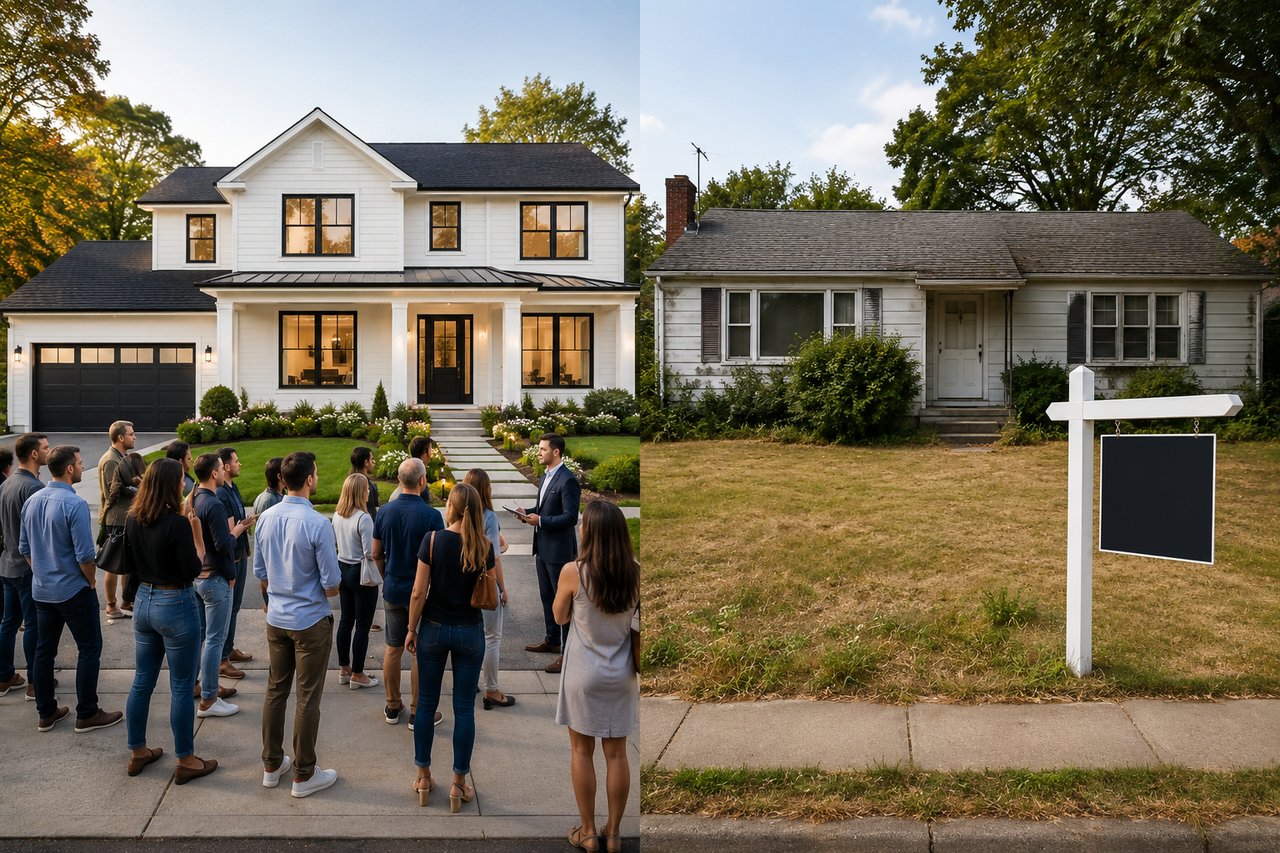
There's a question I keep hearing from people in my sphere — buyers frustrated after losing another offer, sellers wondering if they've missed their window, homeowners curious why their neighbor's house sold in a week for over asking. The answer to all of them is the same: we have a profound inventory problem on Long Island, and it's been building for years.
Let me show you what I mean.
The Numbers Don't Lie
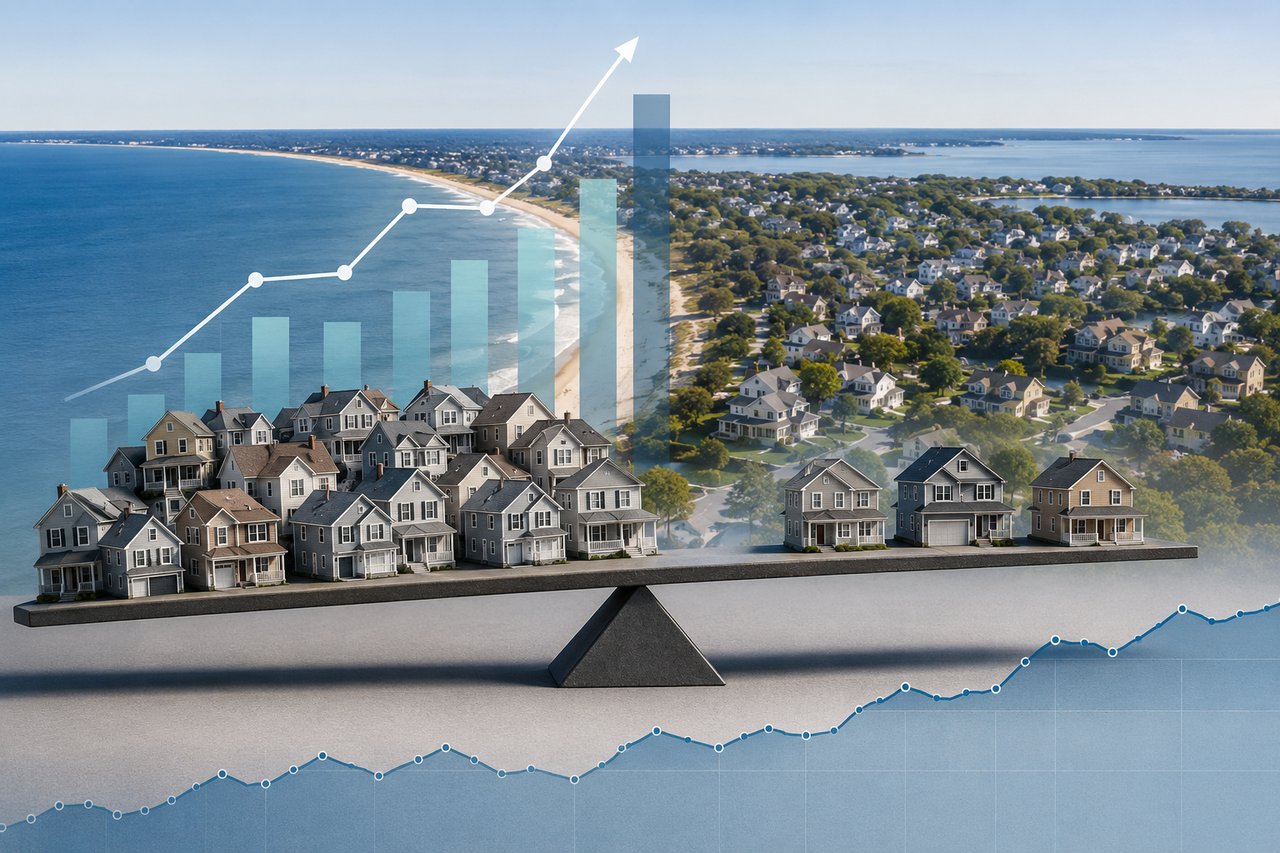
I pulled ten years of data for both Suffolk and Nassau Counties — homes for sale, months of supply, and median sale prices going back to January 2016. When you lay it all out, the picture is stark.
In early 2016, there were roughly 14,500 homes for sale across both counties combined. The market had about 6–7 months of supply, which put it firmly in buyers market territory. Prices were relatively flat. Buyers had options, negotiating power, and time.
That world is gone.
As of April 2026, there are approximately 5,700 homes for sale across Suffolk and Nassau combined — and months of supply sits right at 3.0. To put that in context, a balanced market — one where neither buyers nor sellers hold a clear advantage — requires 5 to 6 months of supply. We're exactly half of that.
What It Would Take to Get Back to Normal
Here's where it gets concrete. To return to a balanced market, Suffolk County alone would need approximately 4,270 more homes on the market than exist today. Nassau would need another 2,970. Combined, we're still talking about roughly 7,200 homes that simply aren't there.
To return to buyers market conditions — the kind we last saw briefly in 2016 — you'd need close to 9,400 additional homes across both counties. That's not a dip in the road. That's a structural deficit that doesn't resolve itself in a quarter or even a year.
The last time this market felt genuinely balanced was roughly 2017 to 2019. The last true buyers market was 2016. Anyone who bought before 2019 operated in a fundamentally different environment than the one we're living in now.
Prices Follow Inventory — Almost Perfectly
What makes the data so compelling is how cleanly prices move opposite to inventory. When supply was high in 2016 and 2017, prices were essentially flat. Suffolk's median was around $330,000. Nassau sat near $455,000.
Then inventory started falling. COVID accelerated the collapse. By 2022, supply had dropped to its lowest levels on record — briefly touching under 2 months — and prices responded accordingly. Suffolk's median is now approaching $680,000. Nassau has crossed $828,000. Both counties have roughly doubled in under a decade.
Since then, prices have plateaued near those record highs. Not collapsed, not corrected — plateaued. And the reason is simple: there still isn't enough supply to shift the balance. A plateau at record prices is still record prices.
What This Means If You're Thinking About Making a Move
If you're a seller sitting on the sidelines waiting for the "right time," the data suggests you're already in it. There are thousands fewer competing listings than there would be in a normal market. Buyers are competing for a historically thin selection of homes. That's the definition of pricing power.
If you're a buyer, I won't sugarcoat it — this market is hard. But waiting for a correction that would require nearly 9,400 new homes to hit the market before it materialized isn't really a strategy. Understanding that reality helps you make smarter decisions about when and where to act.
And if you're simply a homeowner curious about what's happened to the market you've watched for the last decade — now you know. The inventory never came back after COVID. And there's no sign it's coming back soon.
Nick Orlando is a Broker Associate with Compass Greater NY LLC, based in Northport. He specializes in residential and commercial real estate across the Town of Huntington, Suffolk County, and Nassau County.