Everyone knows the story by now: not enough homes, too many buyers, prices go up. That explanation isn't wrong, but it's incomplete. And when you leave out half the picture, you miss why this market keeps defying gravity even as mortgage rates hover in the mid-sixes.
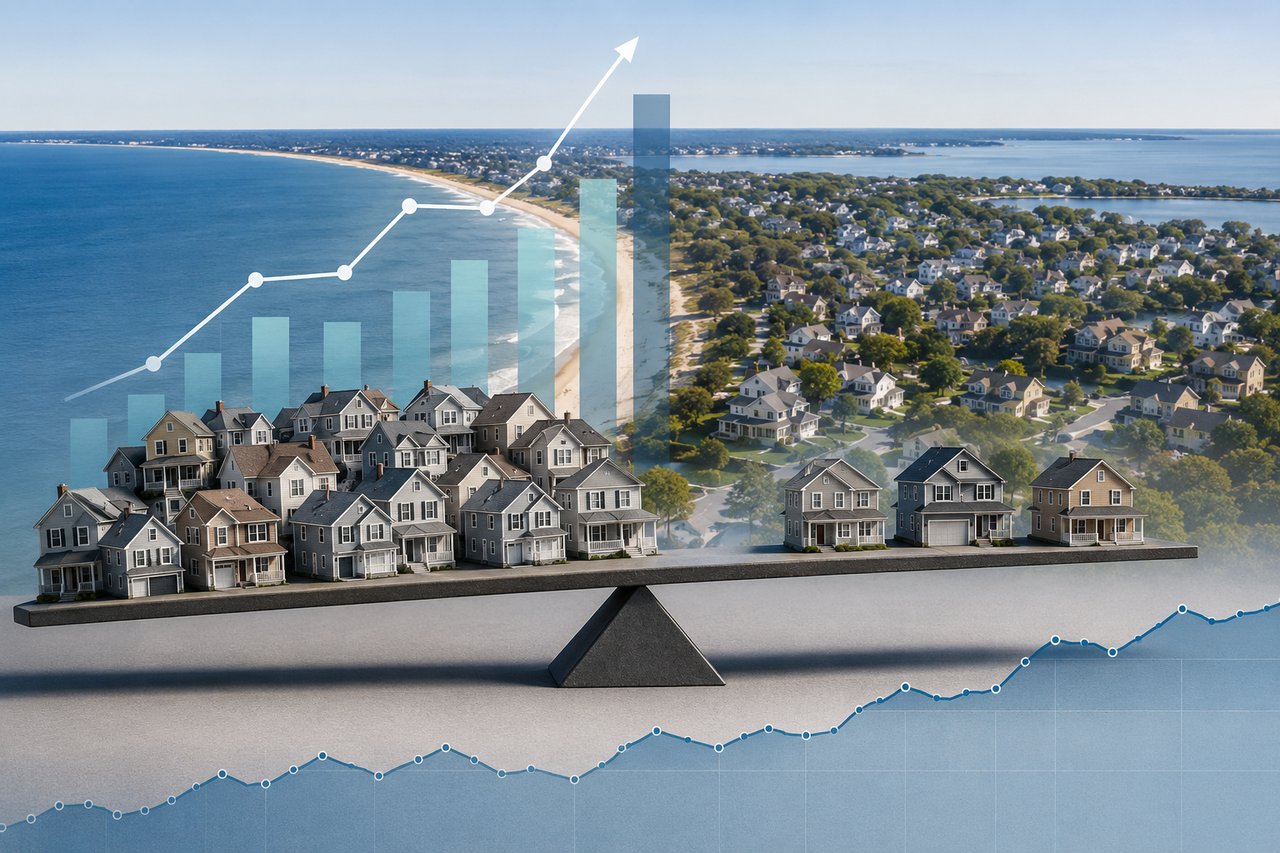
Low inventory is the headline. It's the most visible force. As of March 2026, there were just 1,943 homes listed in Nassau County and 2,521 in Suffolk, for a combined total of 4,464 active listings across both counties. That's down nearly 14% from the same time last year, against a balanced market norm that would typically carry closer to double that supply. When there's only a little product available, and buyers are still showing up, prices don't fall. They climb.
The median sale price in Nassau County came in at $810,000 in December 2025, with Suffolk at $680,000, and both counties have held close to those levels through the first quarter of 2026. Those are numbers that would have seemed extraordinary even five years ago, when Nassau's median was sitting around $600,000, and Suffolk's was under $475,000. And yet the market keeps moving.
But here's what doesn't get enough credit: the people buying these homes have jobs. Good ones. Stable ones. Long Island's unemployment rate came in at 3.2% in December 2025, Nassau at 3.1%, Suffolk at 3.4%, compared to a statewide average of 4.6% for the same period. That's not a footnote. That's the foundation.
Think about what low unemployment actually means for a housing market. It means fewer people are forced to sell. It means buyers feel confident enough to stretch for a home even at today's prices. It means dual-income households are qualifying at price points that would have seemed out of reach a decade ago. Confidence drives decisions, and right now, Long Island workers have reason to feel confident.
Housing markets don't just move along supply-and-demand curves; they move on psychology, and psychology tracks employment. When people feel secure in their income, they buy. When they worry about their job, they wait. The waiting we saw in 2023 and early 2024 was less about rates and more about uncertainty. That uncertainty has largely lifted, at least for now, and the buying activity reflects it.
What we're left with is a genuine perfect storm, not in a hyperbolic sense, but in a mechanical one. You have a seller population that largely won't list because they locked in 3% mortgages and have nowhere obvious to go. You have a buyer population that is employed, confident, and competing for what little is available. And you have an underlying local economy, healthcare, professional services, defense, and finance that have kept Long Island's workforce relatively insulated from the layoff waves hitting other parts of the country.
Education and health services, and professional and business services, continue to be the strongest job sectors on Long Island. These aren't minimum wage positions. They're career jobs with salaries that support $700,000 mortgages. The job and housing markets are telling the same story; they're just usually reported in different sections of the paper.
None of this means prices will rise indefinitely. If rates move meaningfully higher, some buyers will retreat. If the broader economy softens, sentiment will follow. But the argument I keep hearing, that Long Island is somehow overpriced and due for a correction, misses the structural reality. You don't get a correction when employed people still want to live here, and there's almost nothing to buy.
The story of Long Island real estate isn't just about inventory. It's about a community where people have jobs, stability, and a strong incentive to put down roots. Until that changes, the fundamentals aren't going anywhere.
— Nick Orlando, Broker Associate | Compass